


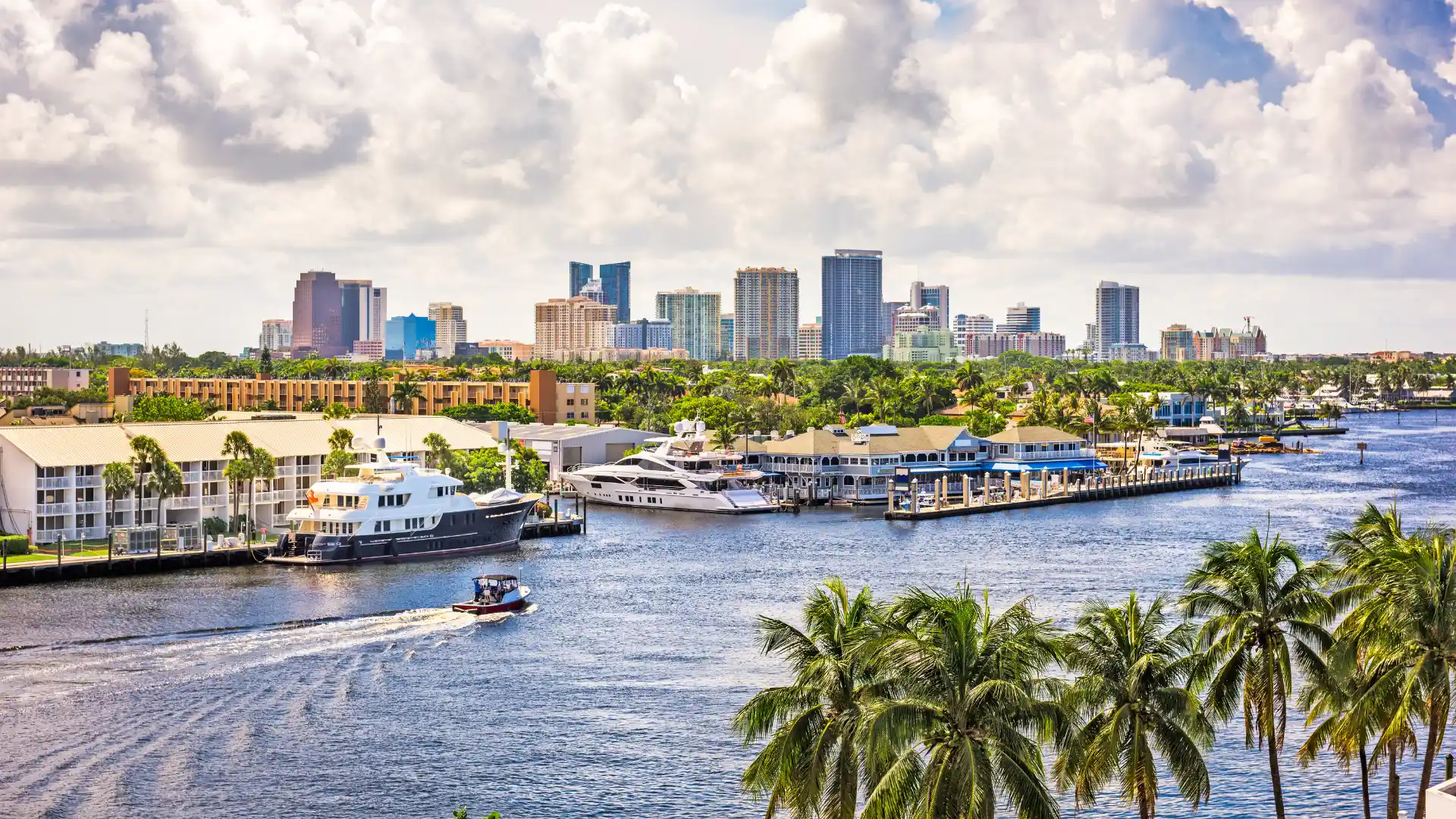
A waterfront home is the quintessential South Florida dream — coffee on the dock, the boat just steps away, the water shifting color through the day. But buying on the water comes with a few considerations you won’t find with a standard home. Here are five things to understand before you make an offer.
1. “No fixed bridges” and dock depth matter as much as the house
For boaters, two phrases can make or break a property. “No fixed bridges” means you can reach the ocean without passing under a low, immovable bridge — essential if you own a sailboat or a larger vessel. Just as important is dock depth: a stunning home means little if your boat can’t sit at the dock at low tide.
Before falling in love with a listing, confirm the route to the inlet, the bridge clearances along the way, and the water depth at the seawall. In neighborhoods like the Las Olas Isles and Rio Vista, these details vary block by block.
2. Insurance, flood zones, and elevation deserve early attention
Waterfront living means factoring in flood insurance, windstorm coverage, and a property’s elevation. These costs can vary widely from one home to the next, and they belong in your budget from day one — not as a surprise at closing.
On the water, the smartest buyers evaluate the seawall, the dock, and the insurance picture with the same care they give the kitchen.
Ask for recent insurance quotes, review the seawall’s age and condition, and understand the flood zone designation before you’re under contract.
3. Assessed value is not market value
The county’s assessed value — used to calculate property taxes — is often very different from what a waterfront home will actually sell for. Florida’s Save Our Homes cap limits how much assessed value can rise each year, so a long-held home may carry a tax basis far below its true market price.
You can look up any property’s official record through the Broward County Property Appraiser, but for what a home is really worth today, you’ll want a current market analysis based on comparable sales.
4. Buy the community, not just the house
Each waterfront enclave has its own personality, price point, and boating profile. Consider what matters most to you:
- Quick, no-fixed-bridge ocean access — think Harbor Beach or the Las Olas Isles
- Historic charm and walkability near downtown — like Rio Vista
- Family-friendly streets with golf and boating — such as Coral Ridge
- A quieter, boater’s small-town feel — like Lighthouse Point
The right neighborhood should fit your lifestyle for years to come, not just check a box today.
5. Work with a local waterfront specialist
Waterfront transactions have more moving parts than a typical sale — dock surveys, seawall inspections, marine considerations, and nuanced pricing. A local expert who knows the water, the bridges, and the block-by-block differences is your best protection and your biggest advantage.
Thinking about a move to the water? Reach out anytime — I’d love to help you find the right home in the right community.